If you have experienced a few years of the KS2 assessments, you will no doubt have noticed that the arithmetic paper tends to follow a fairly similar pattern each year, and so it has been a couple of years now since we last shared our thoughts about it. It only seems fair then to revisit it now, to explore what has changed and what has stayed the same ahead of our upcoming blog focussing on the KS2 reasoning papers.
In this blog, we will explore some of the similarities and differences that we have noticed through question analysis. In our next blog, KS2 Arithmetic 2026 – Part 2: Noticing and making connections, we will then share our thoughts with a spotlight on the question: ‘Are children really taking notice of the question they are solving? Or are they merely working through a process?’
Quick domain and year group comparisons
Using the domain codes, on page 4 of the mark scheme, we can compare both the spread of the year group references as well as the domain content references. In simple terms: which year group does content come from in any given question and which mathematical domain(s) does it relate to. If you want to go into more detail about the content domains then you can do so by exploring the key stage 2 mathematics test framework.
So, let’s compare the number of marks available from each year group (remembering that there are 36 questions in the paper but 40 marks available as 4 questions are 2-mark questions).

We can see that the Year 3 content has gradually increased while the Year 4 content has gradually decreased. Based on this analysis, the Year 5 and Year 6 marks are comparable across the 3 years. Typically, 32.5% or 13 marks are available for questions based on Year 3 and Year 4 national curriculum content. This highlights how important it is that content from Year 3, Year 4, and Year 5 is rehearsed and secured across KS2. In fact, for the first 18 questions in the 2026 paper, only 2 of the questions were referenced as Year 6.
But what learning is most crucial to rehearse across KS2? Let’s take a look at the content domains. This gives us a broad overview of the content, (and we might raise an eyebrow at the idea that only 1-2 questions focus on place value, when we know- this underpins so much learning - we will come back to this later), but it does give us a starting point. We would need to dig deeper into the actual questions to drill down to specific content such as adding fractions etc.
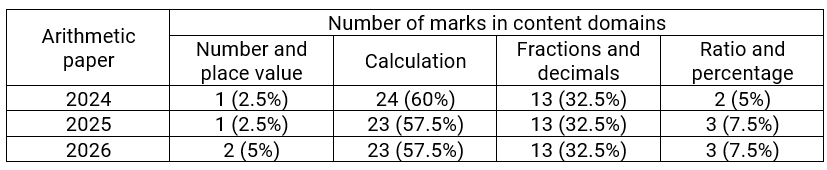
Calculation (addition, subtraction, multiplication and division) remains the highest value content domain according to this analysis, with a large number of marks also attributed to fractions and decimals.
It is important to note here that although the number and place value domain appears to have the fewest available marks, actually secure knowledge here underpins many of the questions throughout the paper. For example, using place value knowledge to solve:
- 3 x 23 (question 4 from 2026) is likely to be solved quickest for many children using basic multiplication facts and place value knowledge.
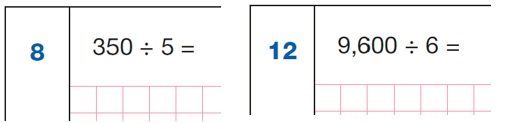
- 350 ÷ 5 (question 8 from 2026) by connecting this calculation with 35 ÷ 5 to make this calculation more manageable.
- 9,809 x 1,000 (question 21 from 2026) heavily relies on place value knowledge, but is considered part of calculation.
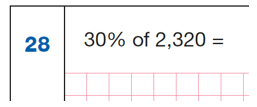
- 30% of 2,320 (question 28 from 2026) by understanding how dividing by 10 effects the place value of the digits as an important first step in solving this calculation, for pupils who start by finding 10%.
What’s the same and what’s different?
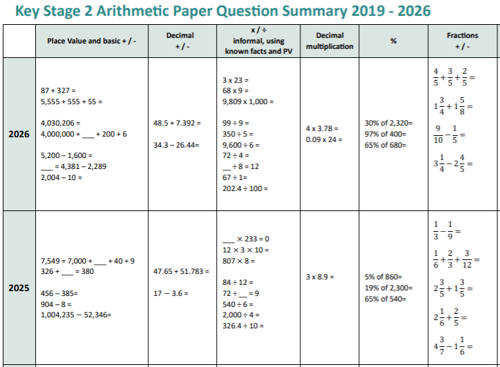
Now let’s dive into similarities and differences over the last few years. To do this, we compiled a useful document which lists all of the arithmetic questions from 2019 to 2026 organised into question types. You can download your own copy of this here:
What’s similar?
As we showed above, according to the analysis found in the mark scheme, the same content domains appear with a similar split of marks. In addition, the marks by year group are roughly in line with previous years. But perhaps we can be more nuanced in our interpretations…
Let’s dive into some more detailed analysis of the questions.
As always, the paper is made up of 36 questions, with a maximum mark of 40. There are always 4 questions worth two marks each; 2 questions when multiplying by a 2-digit number and 2 division questions when dividing by a 2-digit divisor. Pupils can score 1 mark if the calculation has been completed using either long multiplication, long or short division but where one error may have occurred (except if this error is omitting the zero when multiplying by tens in long multiplication). You can explore the 2026 key stage 2 mathematics test mark schemes Paper 1: arithmetic, Paper 2: reasoning and Paper 3: reasoning for more detail.
In 2026, one question was presented with the missing number followed by the equals sign at the beginning of the calculation. In 2024 we saw two examples like this whereas last year there were none.
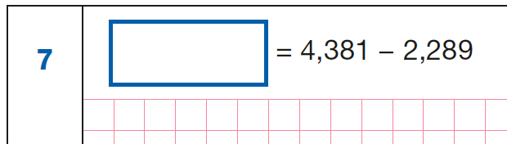
For the last 3 years we have seen a place value question where a number has been regrouped and one of the regrouped parts is unknown. This year and in 2024 the number was a 7-digit number and last year it was a 4-digit number. (Fun fact: because of the size of the number, this question was denoted as Year 6 content, even though you could argue the concept is fairly basic.)

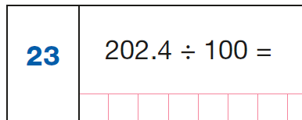
As with the last 3 years, there were no decimal numbers multiplied by a power of 10 (e.g. 25.43 x 10 from 2019) but there was a question assessing dividing a number involving decimals by a power of 10.
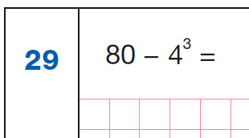
We see an example of a ‘special’ number and like the previous 2 years, this is included within a calculation meaning that the order of operations also needs to be considered when solving.
We know that calculating with fractions makes up a number of marks throughout the paper and this includes adding and subtracting fractions, including proper fractions and mixed numbers. There is at least one example of adding or subtracting fractions where: the denominators are the same, one denominator is a multiple of the other, or both denominators need converting. See Key Stage 2 SATs arithmetic paper question summary 2019-2026 for a list of the questions.
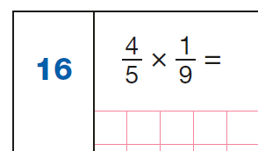
Once again one question was included where pupils needed to multiply a fraction by a fraction. However, unlike the previous 2 years, the product could not be simplified.
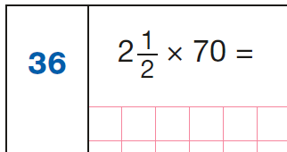
And on the theme of fractions, once again we see a mixed number multiplied by a whole number. e.g. 2 1/2 70 in 2026, similar to 3 1/3 in 2025.
In 2026 and 2025 both of these resulted in improper fractions needing to be converted to a whole number, if children choose to convert the mixed number to an improper fraction before multiplying. This requirement to simplify the improper fraction to a whole number was explored in our in our previous blog Diving into the 2025 KS2 SATS Arithmetic Paper: Using the Question Level Analysis, where we compared efficient strategies based on the 2025 question 3 1/3 12, and why 120/3 given as an answer, rather than 40, did not achieve the mark.
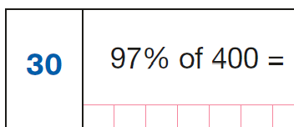
Similarly to 2025, calculating a percentage of an amount appears 3 times (in 2024 it appeared twice). Similar to 2025, children needed to find 65% of a 3-digit multiple of 10. They also needed to find 97% of a 3-digit multiple of 100 which could be solved by subtracting 3% from 400. Similarly in 2025, children needed to find 19% of a number which could be solved by subtracting 1% from 20%. Like in the previous 3 years, all of the percentages could be calculated if children have secure knowledge of finding 1%, 10% and 5% of a multiple of 10 or a multiple of 100.
What’s different?
Let’s start off with a focus on multiplication and division:
In previous years, calculations where formal multiplication or division may have been the most efficient methods for example when solving a 3-digit x 1-digit calculation or a 3-digit or 4-digit divided by a 1-digit number. Again, do explore Key Stage 2 SATs arithmetic paper question summary 2019-2026.pdf for a list of the questions. Instead, this year, calculations which relied more on application of place value knowledge were included. If children have good knowledge of place value and regrouping, the following calculations could be solved using mental strategies and jottings.

Where 3-digit or 4-digit divided by a 1-digit calculations were included, these were multiples of 10 or 100 and again, would arguably be solved more efficiently using multiplication facts and place value knowledge rather than a formal method. More on this in our next blog: KS2 Arithmetic 2026 – Part 2: Noticing and making connections
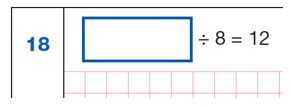
This paper is the first in recent years that we’ve seen a division question presented with an unknown divisor, but a known dividend and quotient, meaning that children need to apply their understanding of part and whole, or have secure recall of x and ÷ facts.
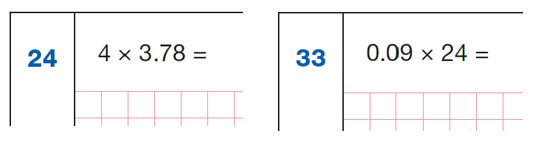
There were two calculations which involved multiplying decimals in comparison to one question in both 2024 and 2025. Both 2026 calculations involve multiplying a number which has 2 decimal places by either a 1-digit or a 2-digit integer. Depending on the strategies chosen, both calculations could involve multiplying to make the decimals integers and more manageable to work with before readjusting the products after calculating. Question 24 could also be solved using the formal written method.
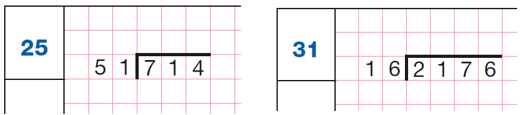
We can’t not mention the formal division questions. This year, both of the divisors were composite numbers meaning that we could use factorisation for division – so for question 31, we could choose to divide by 2 and then divide by 8 for example. In previous years, at least one of the divisors has been a prime number. A similarity worth note here, is that none of the formal division calculations from the past 3 years have resulted in a remainder.
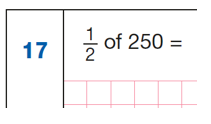
As discussed in the similarities, where we explored fractions of amounts, this year saw a fraction of an amount presented using the word ‘of’ for the first time since 2022. This means that children need to be confident with seeing this presented using both ‘of’ and ‘x’ on order to solve efficiently.
This year we also saw a percentage of amount presented with a 4-digit multiple of 10. In past years, where a 4-digit number is included, these have been multiples of 100. If children choose to use the strategy of finding 1% and then multiplying by the percentage, then the division would result in a quotient with a decimal potentially making both the division and then the subsequent multiplication trickier.
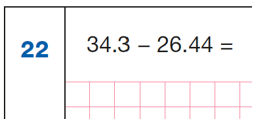
Finally, let’s turn our attention to decimals and subtraction. In previous years, there have been questions where a decimal number is subtracted from a whole number but in the 2026 paper, both the minuend and the subtrahend involve decimal places – and a different number of decimal places at that!
So, what can we take from this?
Across the last three years, the balance of marks between the content domains has stayed broadly the same. Calculation continues to account for the largest proportion of marks, fractions and decimals remain a significant feature, and almost half of the available marks continue to be drawn from Year 6 content. At the same time, a substantial number of marks are linked to content first introduced in Years 3, 4 and 5. This serves as a powerful reminder that arithmetic success is built over time and depends upon secure foundational knowledge from across the whole of Key Stage 2.
When planning arithmetic rehearsal across Key Stage 2, and in particular in Year 5 and Year 6, it is important to ensure that high value learning is revisited, secured and built upon. For example, if we take and use questions from previous papers as a starting point and stimulus, we can plan further similar questions which explore and expose the underpinning learning into our teaching and then subsequent pupil rehearsal that will build this learning up over time. This might include rehearsing immediately following a model or worked example, as well as revisiting the learning away from direct instruction.
The following questions might also be useful for reflection:
- Has the learning stuck?
- Might we need additional teaching?
- How will we continue to keep this learning fresh?
I’ll link to this useful document one more time as an aid for considering the sorts of examples to model and then provide as rehearsal:
Ultimately, the value of analysing the arithmetic papers is not in attempting to predict next year's questions. Instead, it lies in identifying the learning that consistently matters, recognising how that learning is being presented, and using these insights to inform the teaching, revisiting and rehearsal opportunities that we provide throughout Key Stage 2. By focusing on the learning that endures rather than the questions that may or may not appear, we are far more likely to support long-term mathematical success than prepare pupils for any single test paper.
Laura Dell