Speaking brings learning to life
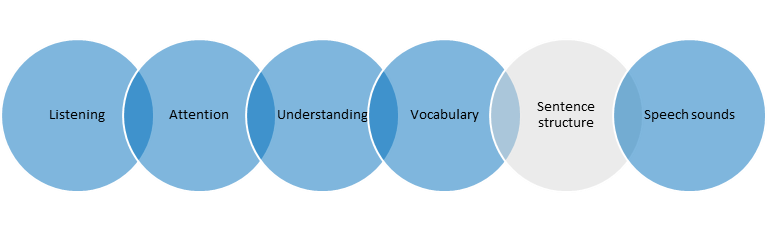
In classrooms across our settings, speaking is how children bring their thinking to life. It allows them to share ideas, clarify understanding, and connect with others. While listening and processing underpin early language development, it is speaking in full sentences that enables children to organise, express, and extend their thinking.
As practitioners, we recognise that developing sentence-level talk is fundamental. It supports not only communication, but also comprehension, confidence, and learning across the curriculum. Every child needs opportunities to move beyond single words and short phrases towards expressing complete ideas.
Creating the conditions for sentence-level talk
From my work with schools, children are more likely to use longer, more complex sentences when they feel safe and supported. In environments where effort is recognised and mistakes are part of learning; children are more willing to take risks with their language.
The role of the practitioner is central to children's language development. Through modelling clear, well-structured sentences, thinking aloud and demonstrating how ideas can be expanded through discussion, practitioners help children to develop the confidence and skills needed to express their own thinking effectively.
Consistent routines also play an important role. Daily opportunities such as sharing experiences or participating in small group discussions provide regular, low-pressure contexts for practising sentence-level talk. With sensitive support, even quieter children can begin to expand what they say.
Speaking as a tool for thinking
It is important that we do not view speaking simply as performance. Children often speak to develop their thinking, and sentence-level talk helps them organise and express these ideas more clearly.
Encouraging children to elaborate on their responses can help children to make connections and explain their thinking. For example, a simple statement such as “It fell” can be extended to “It fell because it wasn’t balanced,”. Sentence stems such as “I think… because…” or “I noticed that…” can help children structure their thinking in more complete ways.
Play provides particularly rich opportunities for this. In role play and imaginative contexts, children naturally begin to link ideas together, developing longer and more detailed spoken sentences as part of their interactions.
Learning through interaction
High quality interaction remains central to developing sentence-level talk. Back-and-forth exchanges give children the opportunity to hear, adapt, and extend their spoken language.
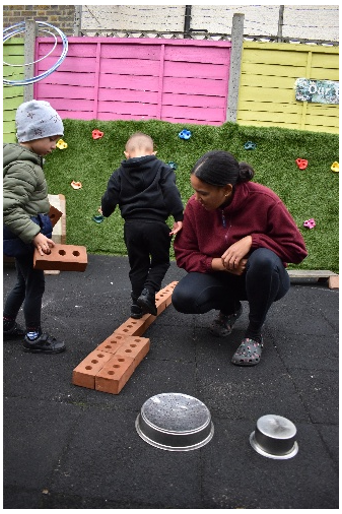
For example, during a small group activity building a model, one child might say, “It keeps falling over,” prompting another to respond, “Maybe we need a bigger base.” The practitioner can then extend the exchange by adding, “You’re thinking about how to make it more stable. What could you use to support it?” In this moment, children are supported to move towards clearer, more structured sentences while developing their ideas collaboratively.
When talk is purposeful, whether through problem solving, recounting experiences, or working together, children begin to speak in fuller, more connected sentences.
The role of practitioner talk
The way in which practitioners use language has a significant influence on children’s sentence development. Modelling complete sentences, extending children’s responses, and rephrasing incomplete ideas helps children to hear what well-formed speech sounds like.
For example, if a child says, “Dog big,” the practitioner might respond, “Yes, the dog is very big. It has a long, fluffy tail.” This maintains, validates and celebrates the child’s contribution while gently modelling a more complete sentence.
It is also important to balance questioning with commentary. Thoughtful observations often create space for children to respond in their own time and in their own words, leading to more natural, extended speech.
Every voice matters
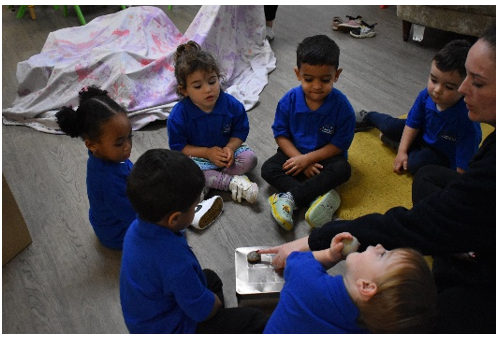
A speaking-rich classroom is one where children are supported to express themselves in full and meaningful ways. Sentence-level talk should be woven throughout the day, across play, routines, and adult-led experiences.
Importantly, we must recognise that children develop at different rates, and inclusive approaches ensure that all children are supported to build towards more complex spoken language in ways that suit them.
Developing sentence-level talk is about more than helping children speak in longer sentences. It is about enabling them to express ideas clearly, engage with others, and take an active role in their learning.
Every child has something worth saying. Our role as practitioners is to support them in saying it with clarity, confidence, and purpose.
Top tips for developing sentence-level talk
- Model full sentences consistently
Use clear, complete sentences for children to hear and imitate. - Extend children’s speech
Build on what they say by adding detail or structure. - Encourage complete responses
Gently prompt children to move beyond single words. - Use talk frames and sentence starters
For example, “I think…,” “I can see…,” “It is…” - Allow time to think and respond
Give children space to form longer spoken ideas. - Talk through shared experiences
Describe actions and events using full sentences together. - Repeat and refine language
Rephrase children’s speech using accurate sentence structure. - Keep exchanges going
Aim for sustained back-and-forth conversation rather than brief answers.
Natasha Dasilva