We’ve become pretty good at teaching from polished schemes of work and beautifully designed slide decks, but in the process, have we started to confuse delivering lessons with designing and enabling learning?
Somewhere along the way, many lessons have stopped showing pupils how to think and started simply showing what to know. The most powerful teaching isn’t about revealing the next slide – it’s about making expert thinking visible. That’s where the flipchart comes into its own.
I’d like to put forward an alternative, that many of us will know works… an alternative to delivery that builds on what we collectively know about effective pedagogy and the craft of teaching.
Effective teachers often:
- build ideas gradually
- narrate their thinking
- make mistakes and correct them
- draw conclusions, and share how they are doing this
- respond to misconceptions
A flipchart naturally supports all of these because the content develops alongside the lesson. Teachers are able to showcase ‘real-life’ thinking by making annotations, drawing diagrams, modelling strategies, exposing their thought processes and making thinking visible for pupils.
Let me share an example of this; teaching a year 3 class the mental calculation strategy of ‘Think 100 for addition’. The key idea being modelled is how to regroup the numbers to make each calculation easier to manage.
The teacher carefully builds the model, starting with tens frames and counters for Think 10 (something the children were familiar with from their year 2 learning), and then considering how the same model could work for multiples of 10, to move into three-digit numbers. Displaying the internal monologue through the questions with annotations recorded on the flipchart enables the pupils to replicate the same thinking when they explore this strategy independently.
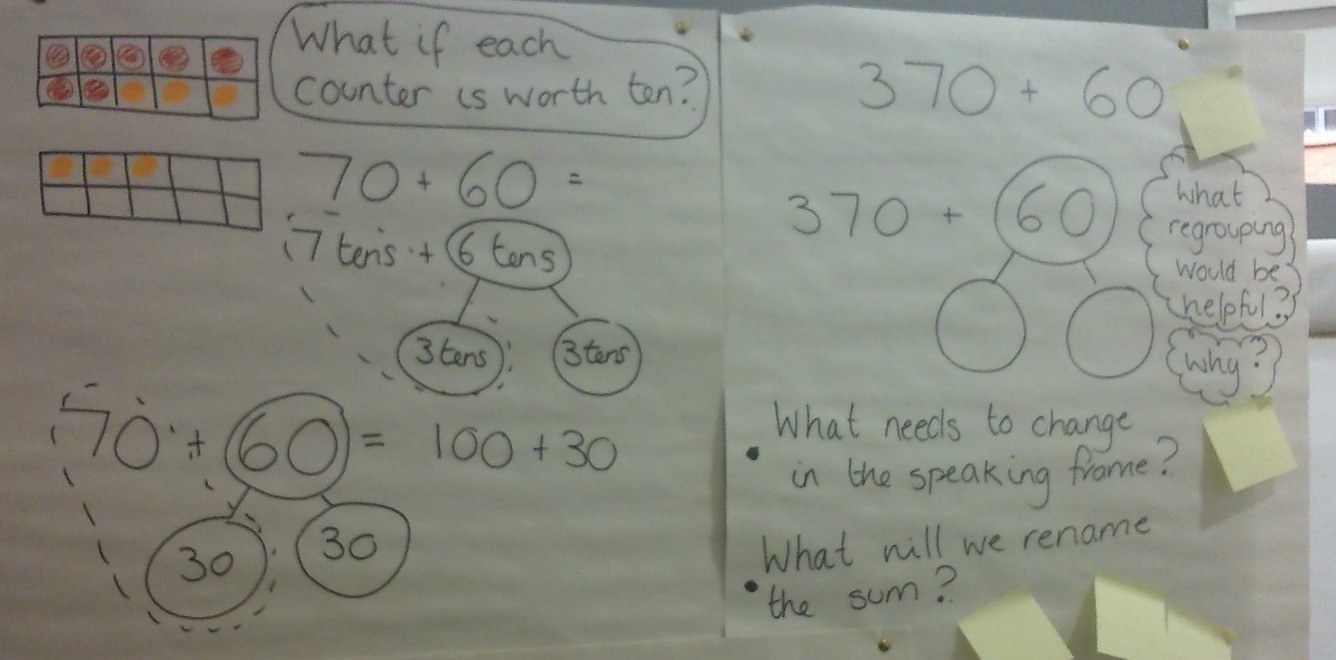
There is something so powerful about the teacher talking, drawing, modelling thinking, vocabulary and questioning, involving and engaging the pupils to ‘play along’. This very active and deliberate way of teaching really draws in pupils’ attention and focus.
Let’s unpick what is hidden within this simple idea of using a flipchart that allows the craft of teaching to come to life. Here are 3 ways that using a flipchart might elevate the teaching and learning in a primary maths lesson:
1. Live modelling
The flipchart provides a space for live modelling, where worked examples can be created with the class. Not only does this process involve the learners, and therefore aids retention and focus, it provides a flexible, responsive approach to teaching and learning, reinstating the teacher as the expert. Once the live model has been captured on the flipchart, it can remain visible for the pupils as the lesson progresses, reducing cognitive load of having to recall and memorise the example later on in their independent work.
Top Tip: prepare some of the flipchart page before the lesson, leaving space for annotations and jottings. For example, record a specific calculation you want to exemplify to avoid having to think of an example on the spot.
2. Building mathematical language
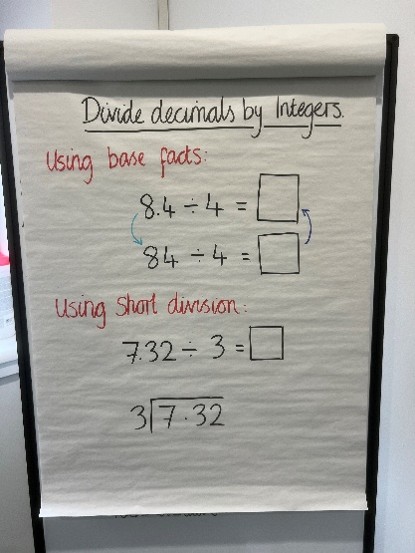
The flipchart is the perfect place to develop and capture mathematical vocabulary in real time. As new language is uncovered, discussed and embedded, the page becomes a lasting reference point. Displayed as part of a working wall, it provides pupils with a reminder of both the terminology and the internal dialogue that can support them when working independently.
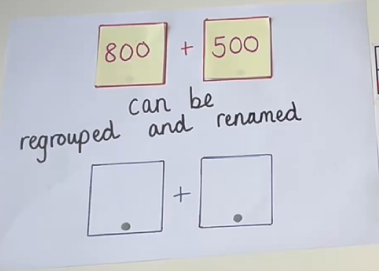
As the teacher models the language, they can also draw out the thinking and make this explicit, emphasising key points, words and ideas. For example, “I know that 60 is 6 tens” or “I know 800 + 500 is worth the same as 1000 + 300, so it can be regrouped and renamed to make the calculation more manageable.”
Top Tip: Post-it notes are your friend! They allow the content to be altered for each new example, whilst retaining consistency in language.
3. Capturing questions
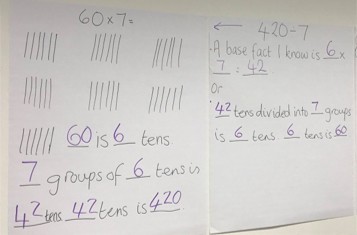
Sometimes pupils ask thought-provoking questions during the lesson that need to be explored, but maybe not right at that moment. If a teacher is halfway through demonstrating a calculation strategy, it may not be particularly helpful to veer off on a tangent in an attempt to respond to a slightly unrelated but interesting question posed by a pupil. These kinds of questions can be recorded on the flipchart to come back to, either later that lesson or at another time. Often these are the incidental moments where connections are made, so it is important not to dismiss the question too quickly. By recording it and coming back to it later, it also allows time for the teacher to consider their response, which is especially helpful if some research is required first!
Top Tip: Get the pupil to record the question themselves. This serves two purposes: First, so that it doesn’t affect the flow of your live modelling and second, it gives the pupil and their question status, showing that their contributions are important and valued. Plus, children love to write on big paper with big pens!
Returning to our central idea: making the most of a flipchart for modelling
In all three of the ideas explored above, the humble flipchart enables the teacher to really respond to the pupils in real time, harnessing their collective focus on the key learning taking place. It creates a space for shared thinking, and after the lesson can be kept and displayed to allow that learning to continue to exist within the classroom learning space, even after the main board has move on to show the next lesson.
The flipchart reminds us that great mathematics teaching is not about delivering content flawlessly; it is about making thinking visible, responding to learners and building understanding together. Sometimes, the most powerful teaching tool in the room is simply a blank sheet of paper and a teacher with a pen.
This blog is the first in a pair of blogs… look out for the second part, coming soon.
Nicola Randall