The teaching of handwriting in reception has prompted significant discussion since the publication of The writing framework in July 2025. In response, some schools have added adult-led sessions to already busy reception timetables. However, the knowledge and skills children need to become efficient writers begin developing well before the reception year. This blog explores how practitioners can strengthen these foundational skills throughout the Early Years Foundation Stage (EYFS), while introducing explicit handwriting teaching at the right time and without placing unnecessary pressure on children or adults.
Schools introduce complex writing tasks too early
The Strong foundations in the first years of school - GOV.UK found that children are often being asked to complete writing tasks that are beyond their capabilities. This does not mean that we should be lowering expectations for children to be able to write sentences for a variety of purposes by the end of the reception year, but it does need adults to be reflective of how children are provided with opportunities to acquire the skills required first. This leads us to the question, “How do you assess foundational knowledge and skills such as handwriting?”

Clearly sequenced progression is required.
When we look at the educational programmes within the EYFS statutory framework for group and school-based providers, we are reminded that “Gross and fine motor experiences develop incrementally throughout early childhood, starting with sensory explorations and the development of a child’s strength, co-ordination and positional awareness through tummy time, crawling and play movement with both objects and adults.” Handwriting is a physical activity. When considering developmental progression, it is important to begin with gross motor control before jumping straight into fine motor and pencil control, as this will help determine the provision being implemented to support physical development.
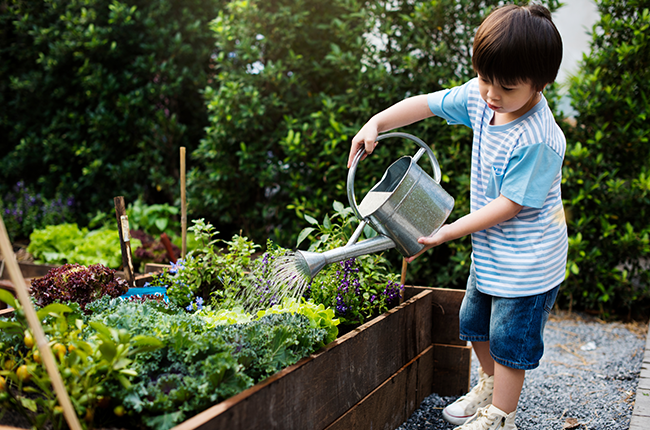
- Can the child lift and carry heavy items such as full watering cans or construction containers?
- Can the child climb using alternating arms and legs?
- Can the child make full circle motions with their arms? What about their elbows or wrists?
If a child is not yet secure in these movements, consider how the provision could offer regular opportunities to develop strength, coordination and control through purposeful whole-body activity. Heavy work and movement experiences can contribute to this development. As The Writing Framework explains, “The reception year provides plenty of opportunities for children to develop body strength and co-ordination as well as fine motor skills, that support them to meet the physical development early learning goals.” The Writing Framework, Department for Education, July 2025.
Understanding of shape, space and pattern
This might seem like terminology used within mathematical concepts, but they are also linked to the knowledge and skills required for handwriting. “It should progress to teaching letter formation, focusing on where to start each letter, the direction of formation, its shape, position and, later on, its spacing relative to other letters.” The Writing Framework, DfE, July 2025. When it comes to teaching handwriting, children need to know where to start and how to control the size of the shapes of the letters. In the EYFS, this can be accomplished through the basic layout of the learning environment, with activity zones that require children to work at different levels and provide opportunities to move around. Instruction games such as ‘Simon Says’ support children to understand about different parts of their body and encourage co-ordinated movement. Transition points, especially when moving from one environment to another, provide an opportunity to practice skills such as staying behind the person if front or following a line on the floor. Activities like this will then support children to know where to start when they begin forming letters and handwriting sessions.

Repetition is key
Children require ample opportunity to rehearse the knowledge and skills that they are learning. Alongside support to develop gross motor control and spatial awareness, children require a variety of opportunities to develop and strengthen their fine motor control. Some schools and settings choose to develop a space for children to explore resources specifically for fine motor skills but where are children able to transfer and rehearse those skills within the rest of the provision?
- Do children have opportunities to rotate the wrist such as twisting or pouring?
- Do children have opportunities to stretch the hand such as when using playdough?
- Do children have opportunities to move digits in isolation such as threading?
Activities that keep the hand busy will support the physical development, strength and stamina that children need to manipulate materials and use tools. Beyond handwriting, children require fine motor skills for a number of everyday tasks. The more opportunity they have to refine these the better.

Handwriting must be taught
As with many things, the skills of handwriting cannot be left to chance and require adult direction. “The importance of teaching handwriting regularly, explicitly, precisely and cumulatively,” is emphasised within The Writing Framework and this is what most schools are trying to navigate with their reception teams. The framework also highlights that “…this might initially include systematic teaching of and practice in moving the pencil to master the horizontal, diagonal, vertical and circular strokes needed for writing.” In other words, the youngest children in our schools are not being asked to participate in whole class handwriting sessions from the first day of term. Instead, we need to ensure there are opportunities for children to develop their gross and fine motor control, spatial awareness and to be able to follow instructions whilst adults use assessment of these skills effectively to know how and when to move children on. It is from here that adult directed handwriting sessions can be facilitated.

Building into the routine, not adding on to it
It might feel like an additional adult led session is required to achieve this but in reality, many schools will have already enabled the natural progression through their daily routine and should consider how to utilise the time more effectively. Morning activities are often used to support fine motor development which, as we have explored, lead to handwriting. Therefore, ensuring there is clear progression throughout the year for this session will enable the evolution of the learning on offer. It might be that there is a period of time directly after lunch that would be better suited to supporting handwriting, where a whole class input to warm up bodies and hands in preparation for a handwriting task is facilitated, or perhaps including handwriting as a small group activity within a literacy session would work best. Things to keep in mind are that any child participating in a handwriting session should be guided by an adult to ensure that explicit instruction is provided and effective assessment can take place.
For support in reviewing progression, routines and adult-led handwriting teaching across your Early Years provision, contact the Early Years team to discuss tailored consultancy.
Jennifer Ferguson