While watching a group of children play at a recent birthday party, I found myself reflecting on how easily traditional ideas about girls and boys can still emerge in children's play.
For a moment, I was ready to blame Barbie – she has been getting the blame for these things for years! But the more I watched, the more I realised it wasn't that simple. It was a reminder that children pick up messages from all around them, and that in the early years we have a wonderful opportunity to help them explore interests, skills and possibilities beyond the pink and blue divide.

The message from society says blue is for boys, pink is for girls
Despite ongoing work around equality and inclusion, research and practice show that gender stereotypes remain deeply rooted in childhood. A commission by the Fawcett Society (2020) found that by age seven, many children already hold fixed ideas about what boys and girls should do, enjoy and aspire to be. These beliefs persist not because children are inherently biased, but because they absorb largely unchallenged messages from the world around them.
Why this matters beyond Early Years
It can be easy to see gender stereotypes as a harmless part of growing up, but the messages children absorb can have a lasting impact. They can shape how children see themselves, what they believe they are good at, and how comfortable they feel expressing their emotions. Boys, in particular, may receive messages that being strong means hiding their feelings, which can make it harder for them to talk about their worries, show vulnerability or ask for help.
For children and young people who are looking for a sense of identity and belonging, these messages can be particularly influential. That is why the work starts in the early years. By helping children develop empathy, emotional literacy and respect for differences, we equip them with the tools to question stereotypes and build positive relationships. As educators and carers, our role in safeguarding children extends far beyond keeping them safe today. If we want young people to grow up with healthy attitudes towards themselves and others, we need to lay those foundations from the very beginning.
Shaping strength through inclusive experiences
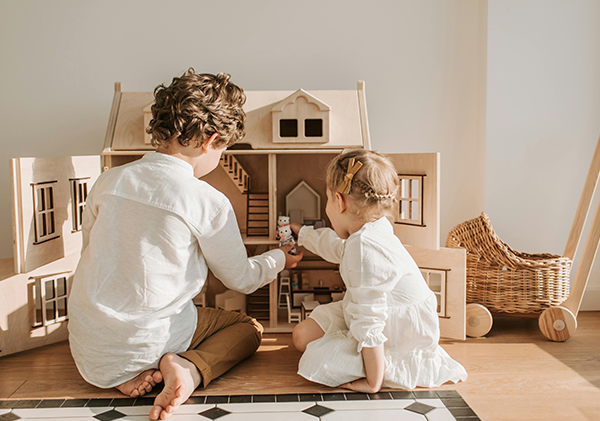
We need to build children's resilience to stereotypes, assumptions and limiting beliefs from the moment they step foot into our provision. This is achieved when all staff support emotional development, provide inclusive experiences and challenge stereotypes kindly, in a supportive and respectful way. Allowing all children to engage in nurturing play and express their emotions freely, we will help them develop empathy and understanding, and build positive, respectful relationships.
What can we do in the Early Years?
There are many opportunities to actively challenge gender stereotypes within practice. Early Years practitioners should model gender neutral values every day. You can help children to develop, without being limited by gender bias by considering the following:
- Ensure adults role model equality by choosing and performing tasks in a non-stereotypical manner.
- Invite non-stereotypical ‘People who help us’ to visit your setting.
- Utilise books and images displaying different genders in varied roles.
- Use non-gendered language, for example when commenting on clothes – “I like the colours you’re wearing” or “That looks like a comfortable outfit for playing”, rather than gendered comments like “pretty dress” or “handsome boy”.
- Avoid gendered labels like “big strong boy” or “sweet little girl”, and focus on feelings and actions, for example “You’re exploring,” or “You’re being gentle”.
- Avoid comments that link abilities to gender, instead give specific praise focusing on skills, not stereotypes, for example “Great problem-solving!” or “You’re being very creative.”
- Take care not to reinforce unnecessary gender divisions, for example refrain from lining up ‘girls’ and ‘boys’ separately or asking boys to carry heavy items and girls to help tidy or care for others.
- Respond to early stereotypes calmly; If a child says, “That’s for girls”, respond with “Our toys are for everyone.”
- Encourage children to participate in a wide range of activities, for example by saying “You can choose anything you’d like to explore” or “Let’s all try something new this week”.
- Urge children to engage in inclusive group work in a range of areas in your setting.
- Gently invite children to try activities beyond their usual play choices.
- Promote critical thinking by discussing stereotypes in simple ways, for example “Is it just boys who can do that, or can everyone?”
- Support parents and carers to better understand how their language and actions can influence and limit children’s ideas and opportunities about the world.
What change will you make today?