As technology advances, education evolves and innovates alongside it. Schools, settings and trusts are increasingly extending their use of technology to add value to teaching, learning and the smooth running of back offices. Alongside the opportunities that technology presents, is a growing cyber security challenge. The DfE Digital and Technology Standards have recently been updated to reflect growing risks and threats, stating that schools must operate secure, resilient and well governed digital environments, with IT support that is proactive rather than reactive.
To ensure full compliance with DfE standards, HFL has redesigned its IT Managed Support Service, leveraging modern platforms powered by data analytics and intelligent issue classification. This enables schools to better plan device lifecycles, set clear short and long term strategies, and prioritise investment effectively. The service provides 360° transparency through customer portals, giving full visibility and control of IT assets, while agentic AI supports both users and technicians to resolve issues more quickly.
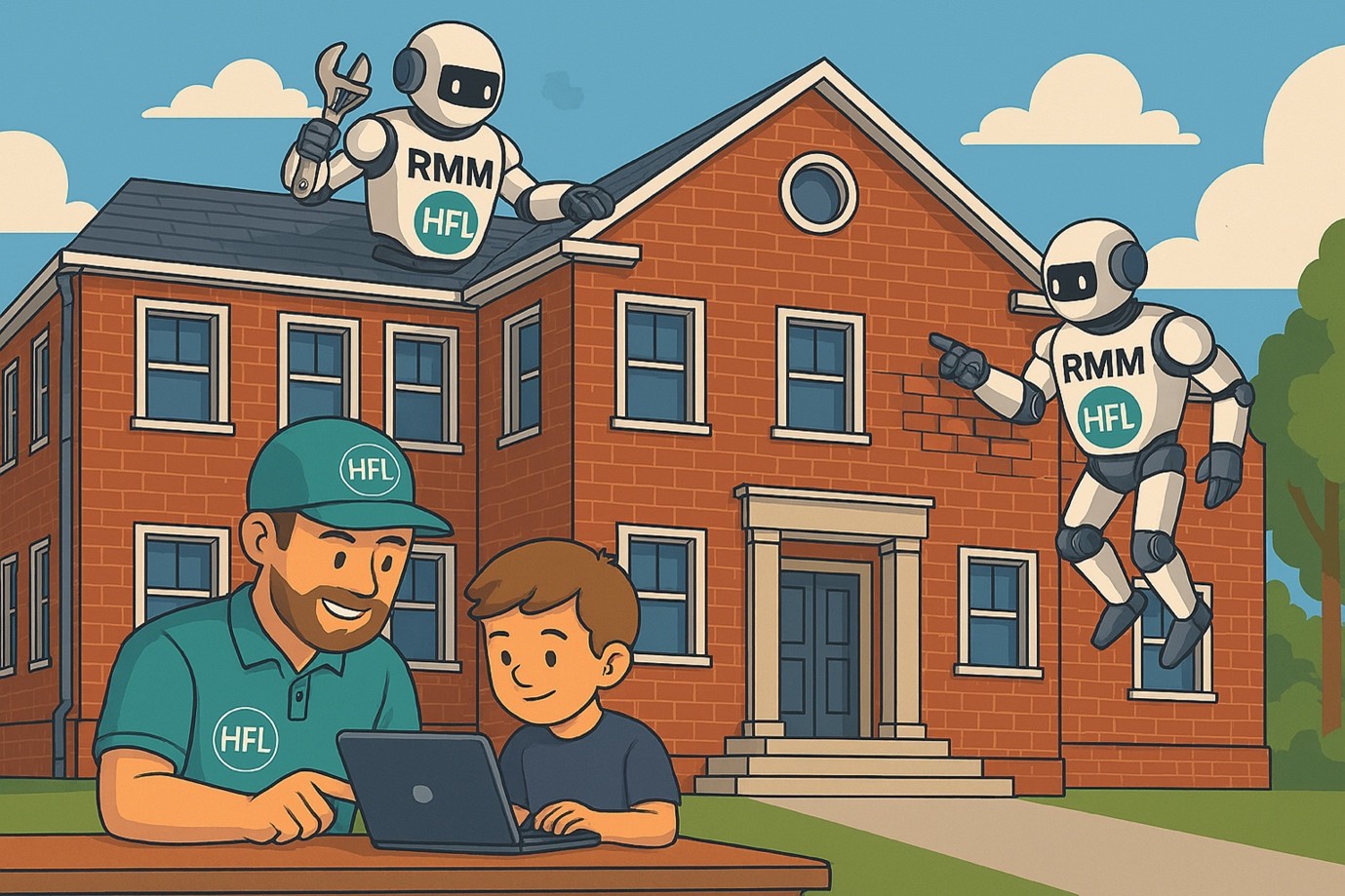
At the heart of our transformation is a proactive Remote Monitoring and Management (RMM) platform that helps to automate crucial aspects of IT infrastructure while also managing to offset rising costs. Although an RMM is often associated with efficiency and automation, its most critical role for schools, settings and trusts is strengthening resilience and reducing risks in an affordable, sustainable way.
Proactive protection, not reactive response
Historically, many school IT support models relied heavily on scheduled site visits or responding only once an issue had already caused disruption. In a cyber security context, this approach leaves schools exposed. Threats can exist silently for weeks or months before becoming visible – often when the damage has already been done.
An RMM platform changes this dynamic completely. It provides continuous, real time monitoring of school devices, servers and key infrastructure. This allows potential security risks to be identified early, often before staff or pupils are aware of them. Suspicious activity, devices falling out of compliance or critical updates missing can be flagged and addressed automatically, without waiting for an onsite visit.
Keeping systems secure and compliant
One of the simplest but most effective cyber security controls is ensuring systems are kept fully up to date. In practice, this is challenging for schools with limited time and stretched budgets. An RMM enables automated patching and update management across operating systems and applications, helping to close known vulnerabilities that cybercriminals commonly exploit.
RMM can be configured to enforce agreed standards for encryption, antivirus protection and access controls. Any device that drifts away from these standards is automatically highlighted, helping schools stay aligned with DfE expectations for secure and well managed technology.
Reducing risk across ageing infrastructure
Financial pressures mean many schools are operating with older hardware than they would ideally choose. Extending equipment lifecycle and replacement timeframe, inevitably increases cyber risks. While RMM cannot replace the need to modernise equipment over time, it can reduce some risks associated with ageing infrastructure.
By providing visibility across all devices, including those that are older or used less frequently, the RMM allows targeted action where risk is highest.
Early detection of threats
RMM platforms enhanced with AI driven automation are increasingly capable of identifying unusual behaviour that could indicate an incident. This might include unexpected spikes in processor activity, unauthorised software installations or abnormal patterns of network usage. Early detection allows swift intervention, reducing the likelihood of data loss, service disruption or safeguarding concerns.
Consider how this compares to relying on a single technician who visits once or twice a week. With such limited time on site, is it realistic to expect them to resolve day-to-day issues like device faults and email problems, while also keeping systems updated, managing cyber risks, and proactively monitoring your environment? Delivering all of this would require constant upskilling outside working hours to keep pace with rapidly evolving threats and technologies. These challenges make it clear that the traditional reactive support model is no longer fit for purpose.
In a school setting, this is particularly important. Downtime and security incidents do not just affect productivity; they disrupt learning, place additional pressure on staff and can undermine trust with parents and governors.
Supporting a skilled, security focused support model
Our investment in RMM goes hand in hand with changes to our technical team structure. By focusing on fewer but more highly skilled Tier 1, 2 and 3 technicians, supported by intelligent automation, we ensure that cyber security issues are handled by specialists with the right expertise. Routine tasks are automated, freeing skilled staff to focus on prevention, resilience and strategic improvement rather than firefighting.
A safer, more resilient digital environment
For schools, an RMM is not just another automation tool. It is a foundation for a safer digital environment that supports learning, protects sensitive data and aligns with national standards. It enables a shift away from reactive support towards continuous protection, ensuring that proactive security is built into everyday operations rather than treated as an afterthought.
Through our redesigned support model, we are helping schools and MATs meet their cyber security responsibilities in a way that is robust, affordable and sustainable – now and for the future.
To learn more about how RMM and our Technology in Schools service can support your school’s cyber security and alignment with the DfE Digital Standards, email ITsales@hfleducation.org.