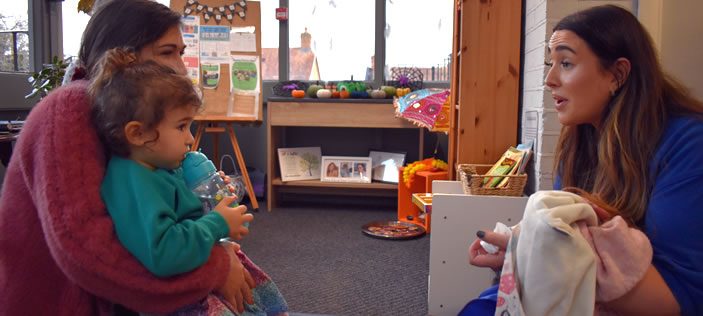
Community spaces like village halls, leisure centres, and faith buildings offer fantastic opportunities for early years provision. They bring families together, make childcare accessible, and strengthen local networks. Operating a childcare provision from a shared space comes with unique challenges, especially when it comes to safeguarding and security.
In this blog, we will explore key risks and practical solutions aligned with the EYFS 2025 statutory framework.
Why shared spaces need extra attention
Unlike purpose-built and sole purpose nurseries and pre-schools, community venues often have multiple users and could contain unrestricted access points. This means early years providers must take additional steps to keep children safe while meeting EYFS requirements.
1. CCTV and data protection
Shared spaces often have CCTV installed for security. But who controls the footage?
Considerations:
- agree on a data-sharing policy with the venue
- restrict access to authorised employees only
- display clear signage and comply with GDPR
- ensure it is included in your policy that CCTV is in use
2. Security and access control
Multiple entry points can increase risk.
Considerations:
- Install secure entry systems such as coded, alarmed, or locked doors. For sites near main roads, car parks, or other high-risk areas, a two-stage entry system is likely to provide an enhanced level of protection.
- Consider all entry and exit points to the space used to provide care for children, as there are often more than one. Consider who can access the different entry points and risk assess these accordingly.
- Review fire doors to ensure they can be used as fire exits but do not allow children to easily leave the premises. Fire exit doors often have handles positioned at child height, which can pose a safety risk. A simple and cost-effective solution is to install a door alarm that alerts staff whenever the door is opened, enhancing security without significant expense.
- Keep a setting visitor log and supervise all visitors who are not employed by the setting.
- Train and provide ongoing support to staff to challenge unauthorised individuals.
- Ensure all community/shared space employees are familiar with the early years provision security processes and child protection policies and procedures. Consider inviting them to attend your safeguarding training and share your safeguarding policies and risk assessments to ensure there is an understanding of the importance of following the procedures to keep children safe. Use signage to support this procedure.
- Have a clear policy in place that ensures that all staff and parents understand the processes as well as what happens if an unauthorised person accesses the early years space while in session.
- Consider establishing regular meetings between the shared space governing body to ensure that both parties can work together to ensure that children’s safety is a priority.
3. Shared toilets
Children using shared facilities may encounter members of the public.
In the Early Years Foundation Stage, Toileting an intimate hygiene - 3.86 it states that providers must ensure ‘Children’s privacy is considered and balanced with safeguarding and support needs when changing nappies and toileting.’
Considerations:
- Supervise toilet visits carefully and plan how this is managed to maintain both staff and child safety, while minimising disruption to play and learning
- Designate child-only toilets or schedule exclusive times so that toilets are not shared by the public when the session is operating.
- Plan where and how nappy changing will take place and ensure that privacy can be maintained for children while balancing safeguarding and allegation risk.
- Maintain hygiene checks and safeguarding oversight.
- If toilets are accessed through an area that may come in to contact with the public, ensure there is a risk assessment in place to minimise risks.
- The DSL or leader to constantly keep procedures under review and monitor their effectiveness making adaptation as needed.
4. Outdoor space access
Getting to outdoor play areas often means passing through shared corridors.
Considerations:
- Use designated routes to maintain effective supervision of children and minimise risk of children encountering the public or leaving the safe space of the setting.
- Use walkie talkies or similar devices to allow staff to communicate easily from one space to another.
- Ensure the space is safe for use by the children and conduct daily checks prior to accessing with children.
- Check if the space is easily accessed by members of the public, consider the height of fencing.
- Plan how you will safely manage children requiring the toilet when in the outside space without compromising safety and whilst also minimising risk of allegation to staff.
- Complete regular risk assessments.
5. Managing public interaction
Strangers in shared spaces pose safeguarding concerns.
Considerations:
- Display restricted access signage.
- Ensure all shared space staff are aware of the restricted access and enforce this with public users.
- Ensure all shared space staff are aware of confidentiality.
- Train staff in challenging and reporting procedures and support them to enact these
- Follow EYFS safeguarding policies for escalation.
6. Managing unexpected events and minimising risk:
- Establish and maintain clear fire and lockdown procedures, ensuring regular drills are conducted to confirm all staff and children understand and can follow these protocols as leaders intend.
- Fire Procedure: include evacuation routes, assembly points, and roles (e.g., who checks rooms, who takes registers).
- Lockdown Procedure: define triggers (e.g., intruder alert), safe zones, communication methods, and staff responsibilities.
EYFS 2025: What you need to know:
- Safeguarding policies and procedures and implementation.
- Suitable person and DBS checks.
- Staff and child ratios and staff deployment.
- Safety of premise including fire risk management.
- Privacy in toileting balanced with safeguarding.
Final thoughts
Community spaces can be a brilliant resource for early years provision but only if risks are managed effectively. By following these steps and aligning with EYFS 2025, you will create a safe, welcoming environment for every child.
Dawn Macdougall